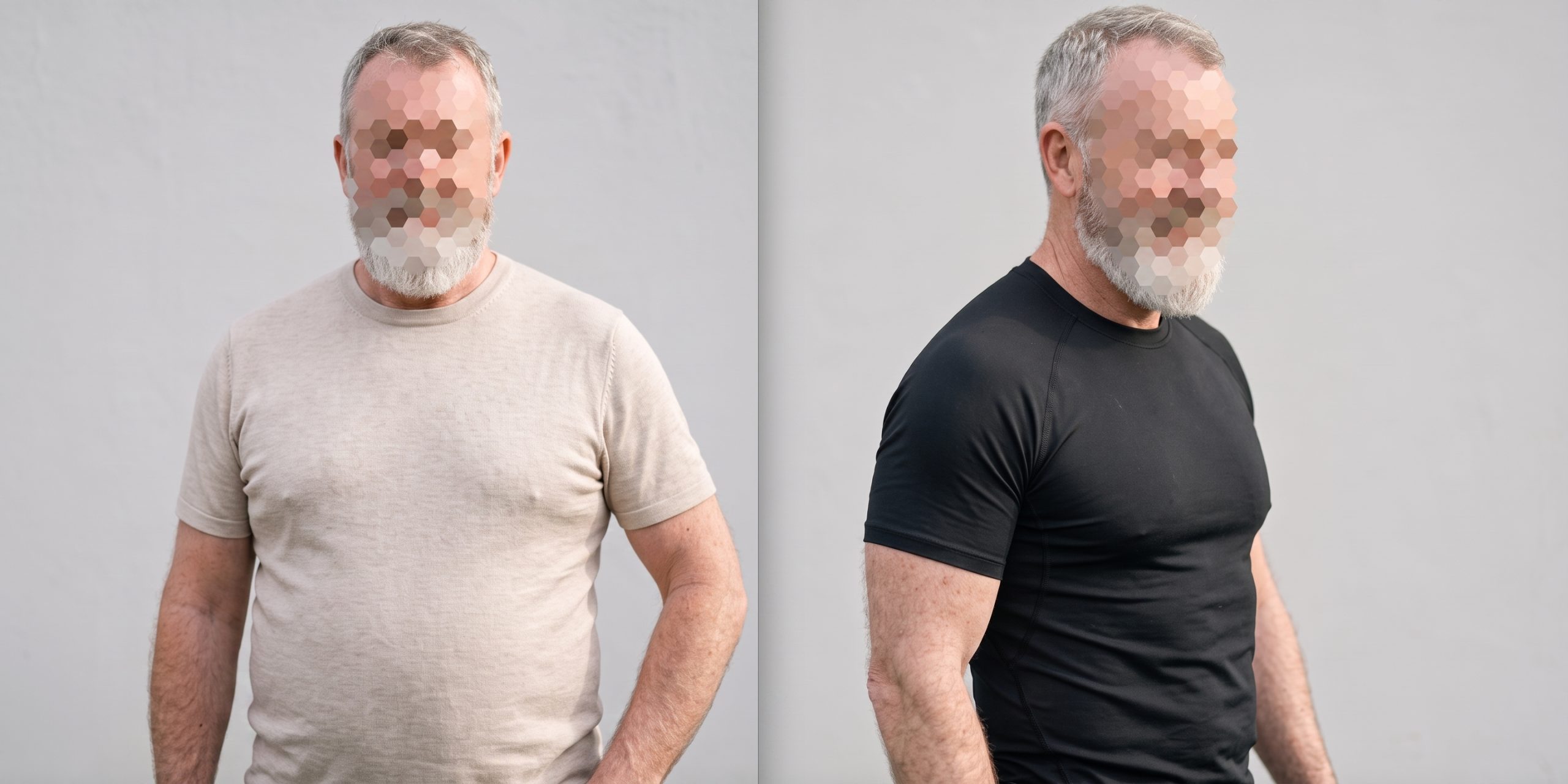
Andrew’s Journey From a 129 cm Waist to 96 cm
“How can I lose belly fat?”
Andrew had asked himself that question many times.
At 52, he had tried diets, downloaded exercise plans and repeatedly promised himself that Monday would be different. Each attempt lasted a few weeks. Then work became busy, motivation disappeared and his old habits returned.
This time, however, something felt different.
The Moment Andrew Could No Longer Ignore
The moment came when Andrew made an excuse not to join his family on a weekend walk.
He told them his back was sore. The truth was that he was afraid he would not keep up.
Walking upstairs already left him breathless. Bending down to tie his shoes was uncomfortable. His back felt stiff in the morning, and he often woke up feeling as tired as when he went to bed.
He avoided photographs whenever possible. When he did appear in one, he looked at his stomach before he looked at his face.
The hardest part was not his weight. It was the growing belief that, at 52, perhaps this was simply how life would feel from now on.
He no longer felt like himself.
What Andrew’s Assessment Revealed
When Andrew completed his initial assessment at WayFiit, the numbers made the situation clear:
- Weight: 112 kg
- Waist: 129 cm
- Body fat: approximately 34%
- Visceral-fat rating: 17
- Squat: 10 kg
- Shoulder press: 10 kg
- Plank hold: 18 seconds
Visceral fat is the deeper fat stored inside the abdomen around the organs. It is different from the softer fat directly beneath the skin.
You cannot accurately judge visceral fat by appearance alone. However, carrying too much of it is associated with insulin resistance, cardiovascular disease and an increased risk of type 2 diabetes.
Andrew’s muscle level was also lower than expected for his size.
This combination mattered. He had not simply gained weight. He had gradually lost some of the muscle that made everyday movement easier while storing more fat around his waist and internal organs.
Andrew did not need another extreme diet. He needed a structured plan that he could follow long enough to produce lasting change.
A Plan Built Around Andrew
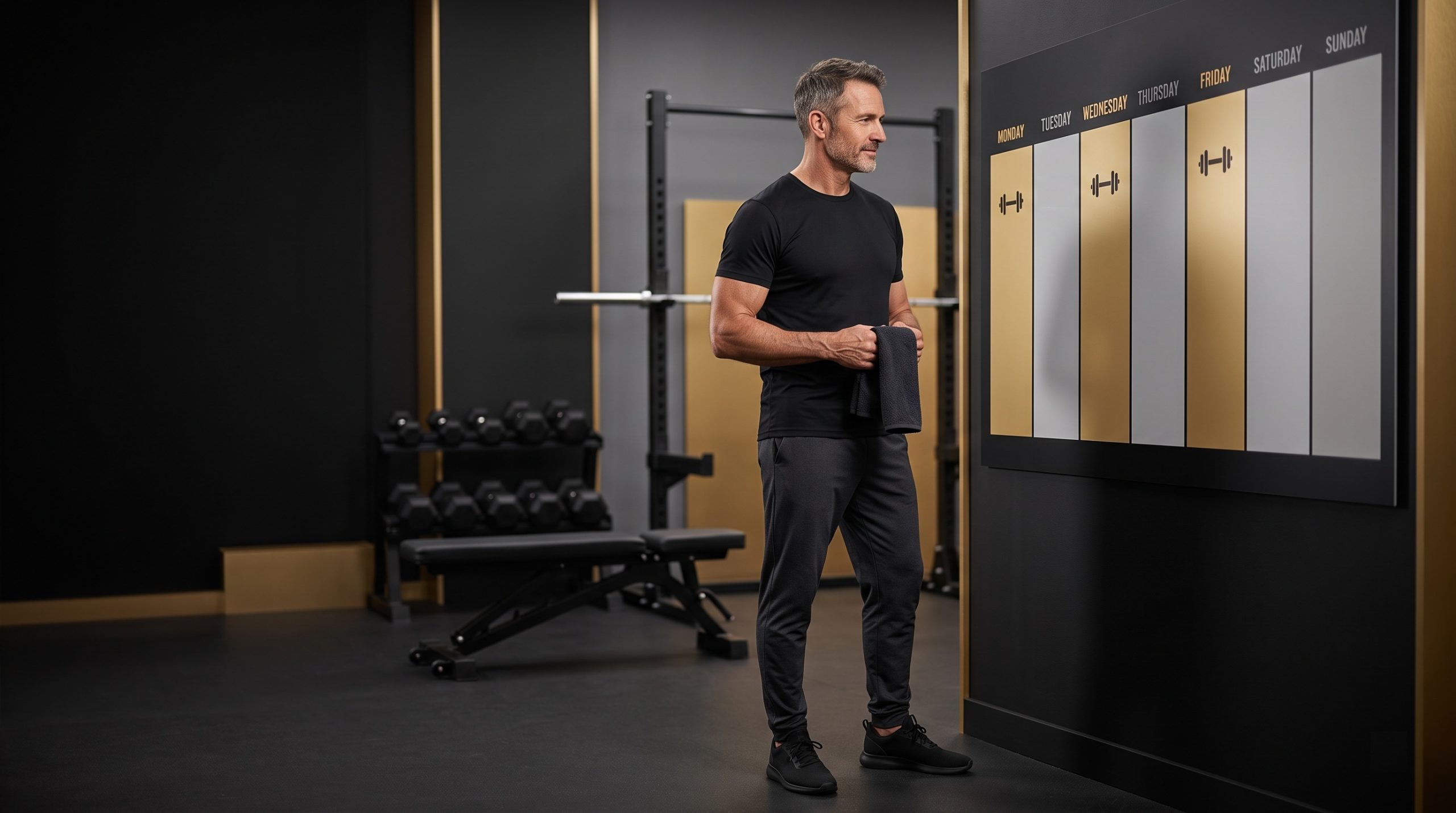
At WayFiit, Andrew was not handed a generic workout and left to motivate himself.
His starting point was measured, his movement was assessed and his limitations were considered. His training plan would be adjusted as his strength, fitness and body composition changed.
The plan focused on three main areas:
- Structured resistance training
- Short high-intensity interval sessions
- A controlled 16:8 eating routine
The 16:8 routine meant eating within an eight-hour period and leaving approximately 16 hours between his final meal and the first meal of the following day.
It was not permission to eat anything he wanted during those eight hours. His meals still needed to provide enough protein, vegetables, fibre and nutritious food to support his training and recovery.
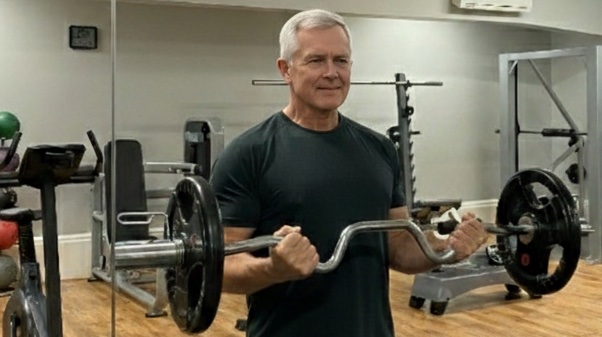
His resistance sessions included:
- Box squats
- Shoulder presses
- Seated rows
- Chest presses
- Romanian deadlifts
- Farmer’s carries
- Planks and other core exercises
These exercises trained the major muscles of his legs, back, chest, shoulders and core.
His interval training was performed on a stationary bike. He alternated short periods of harder effort with slower recovery periods.
The aim was not to leave him exhausted on the floor. It was to challenge his heart and lungs safely and gradually improve his fitness.
The First Session
Andrew began squatting with 10 kg.
His first concern was not how much weight he could lift. It was controlling the movement and standing back up safely.
He also started the shoulder press with 10 kg. Even this relatively light weight required concentration because his shoulders, arms and core were not accustomed to working together.
After a short interval on the bike, his breathing became heavy and his legs began to burn.
A voice in his head told him how far he had allowed himself to fall.
Still, he finished the session.
It was not an impressive performance to anyone watching. To Andrew, it was the first promise he had kept to himself in a long time.
When the Scale Stopped Moving
For almost four weeks, Andrew’s weight remained close to 105 kg.
He felt embarrassed by how quickly the old doubts returned.
Perhaps the first few weeks had only been luck. Perhaps his body was different. Perhaps he was destined to lose a little weight and then gain it all back, just as he had before.
His first reaction was to eat less and exercise harder.
That would have been a mistake.
His measurements exposed what the scale had hidden.
His waist was still becoming smaller. His strength was increasing, and his lean muscle was being protected. His body was changing even when his total weight remained almost the same.
The plateau was not failure.
Andrew was losing body fat while maintaining and gradually building muscle. Because muscle is denser than fat, his body could become smaller and stronger without producing a dramatic change on the scale every week.
Instead of making the programme more extreme, Andrew continued following the plan.
The Week That Nearly Stopped Him
Four months into the programme, Andrew experienced a difficult period at work.
He slept badly, missed two sessions and returned to some of his old eating habits. His weight increased by just over 1 kg.
In the past, this would have ended the entire attempt.
Andrew would have told himself that he had ruined everything. One difficult week would have become one difficult month.
This time, he looked at the situation differently.
The increase was small compared with what he had already achieved. His previous training had not disappeared, and one imperfect week had not erased four months of work.
He returned for his next scheduled session.
There was no punishment workout. He simply restarted with squats, rows, shoulder presses and controlled intervals on the bike.
That decision was more important than any single exercise.
Andrew was learning that success did not require perfection. It required returning to the plan whenever life interrupted it.
His Progress After Six Months
After six months, Andrew’s measurements showed a much broader transformation:
| Measurement | Starting point | Six months |
|---|---|---|
| Body weight | 112 kg | 99 kg |
| Body fat | 34% | 28% |
| Waist | 129 cm | 104 cm |
| Visceral-fat rating | 17 | 13 |
| Squat | 10 kg | 40 kg |
| Shoulder press | 10 kg | 45 kg |
| Plank hold | 18 seconds | 55 seconds |
The changes were not limited to the gym.
Andrew could climb stairs without stopping. He no longer needed to push against the arms of a chair to stand up. His back felt less stiff, and carrying shopping bags became easier.
These ordinary moments meant more to him than the number on the scale.
He was not only becoming lighter. He was rebuilding the physical ability he had gradually lost.
The Test He Had Been Avoiding
Before starting at WayFiit, Andrew had stopped joining his family on longer weekend walks.
Nine months into the programme, he agreed to join them.
The route included a long hill that he had struggled with several years earlier. As the hill became steeper, Andrew waited for the familiar panic in his breathing.
It never came.
His legs were working, his breathing was controlled and, for the first time in years, he was not the person asking everyone else to slow down.
When he reached the top, nobody handed him a medal. There was no cheering crowd.
There was simply the quiet satisfaction of knowing that his body was no longer controlling what he could and could not do.
The work in the gym had been preparing him for his life outside it.
Andrew’s Results After One Year
Twelve months earlier, Andrew’s waist measured 129 cm. It now measured 96 cm.
His visceral-fat rating had fallen from 17 to 9, while his estimated lean muscle had increased by 6.4 kg.
His complete results showed the scale of the change:
| Measurement | Starting point | One year |
|---|---|---|
| Body weight | 112 kg | 92 kg |
| Body fat | 34% | 23% |
| Waist | 129 cm | 96 cm |
| Visceral-fat rating | 17 | 9 |
| Estimated lean muscle | Starting measurement | Increased by 6.4 kg |
| Squat | 10 kg | 70 kg |
| Shoulder press | 10 kg | 55 kg |
| Plank hold | 18 seconds | 90 seconds |
Andrew had lost 20 kg and reduced his waist by 33 cm.
But he had not simply become a smaller version of the man who began the programme.
He had built muscle, increased his strength and created a more capable body.
Visceral-fat readings from body-composition equipment are estimates rather than medical diagnoses. However, when measurements are completed consistently under similar conditions, they can help track the direction of someone’s progress.
Why Andrew’s Approach Worked
There was no single exercise that removed fat directly from Andrew’s stomach.
Squats strengthened his legs and core, but they did not specifically burn belly fat. Planks made his middle stronger, but they could not decide where his body would lose fat.
Andrew’s waist became smaller because several parts of his lifestyle began working together.
Resistance Training Helped Protect His Muscle
Losing weight without resistance training can also result in muscle loss.
Andrew’s resistance exercises gave his body a reason to maintain and build muscle. Gradually increasing the resistance continued to challenge his body as he became stronger.
Adequate protein supported the repair and rebuilding process.
His early strength improvements were not caused only by larger muscles. His nervous system was also becoming better at communicating with them.
His body learned to recruit more muscle fibres, control movement and produce force more efficiently.
In simple terms, Andrew was learning how to use his body again.
Interval Training Challenged His Heart and Lungs
During each harder interval, Andrew’s muscles needed energy quickly. His heart and breathing rate increased to meet that demand.
During the recovery periods, his body worked to prepare for the next effort.
Over time, his heart became better at moving blood and his muscles became better at using oxygen. This is why stairs and longer walks gradually became easier.
Research has found that different forms of exercise can reduce visceral fat, with high-intensity interval training producing strong results in people with overweight or obesity. Read the systematic review and meta-analysis.
Consistency Mattered More Than One Hard Workout
Andrew’s results did not come from occasional extreme sessions.
Research suggests that the amount of exercise performed each week matters. Regular exercise completed in sufficient amounts is more reliable for reducing visceral fat than isolated bursts of activity. Read the exercise dose review.
Andrew improved because he repeated the work week after week and allowed the programme to progress with him.
His Eating Routine Gave Structure to His Day
The 16:8 eating routine helped Andrew reduce late-night eating and unnecessary snacking. It made his daily food intake more organised and helped him maintain a manageable calorie deficit.
Time-restricted eating is not magic, and research on its specific effect on visceral fat remains mixed. Its practical value for Andrew was the structure it provided.
A major review published in the New England Journal of Medicine discusses how intermittent fasting may affect metabolism and general health, although individual responses can vary. Read the scientific review.
Better Sleep Supported the Process
Andrew learned that poor sleep affected his appetite, energy and training quality.
He began protecting his bedtime, reducing late-night eating and planning his meals in advance.
Controlled research has found that severe sleep restriction can increase abdominal and visceral fat even when the change in total body weight is relatively small.
Sleep was not a minor extra. It was part of the programme.
So, How Can You Lose Belly Fat?
You cannot choose exactly where your body loses fat first, and abdominal exercises alone will not remove belly fat.
A more effective approach combines:
- A manageable calorie deficit
- Regular resistance training
- Cardiovascular or interval exercise appropriate for your ability
- Adequate protein
- Nutritious, high-fibre foods
- Consistent sleep
- Less added sugar and excessive alcohol
- Regular measurements that track more than body weight
- A plan that can be adjusted as your body changes
Andrew did not succeed because he followed a perfect programme every day.
He succeeded because he kept returning to it.
What Really Changed Andrew?
It was not one diet, one exercise or one sudden burst of motivation.
Resistance training rebuilt his strength. Interval training improved his fitness. His eating routine gave structure to his day. Regular assessments showed him progress that the bathroom scale could not always reveal.
Most importantly, he stopped allowing one difficult week to become an ending.
Andrew did not become a different person.
He became a stronger, healthier and more capable version of the man who had been there all along.
If you recognise yourself in the man Andrew was at the beginning, the answer is not another extreme Monday morning plan.
Begin with an honest assessment. Follow a programme appropriate for your body, and continue long enough for small improvements to become a different way of living.
At WayFiit, we help adults in Galway reduce body fat, rebuild strength and regain confidence in a private and supportive training environment.
Apply for a complimentary consultation and trial session to discover the right starting point for you.
Andrew’s name and certain identifying details have been changed for privacy. His story and measurements reflect results and experiences observed among WayFiit clients. Individual results vary.