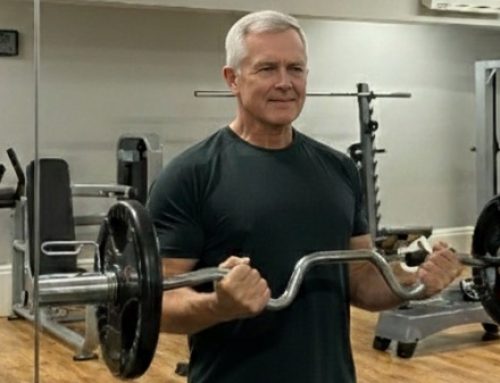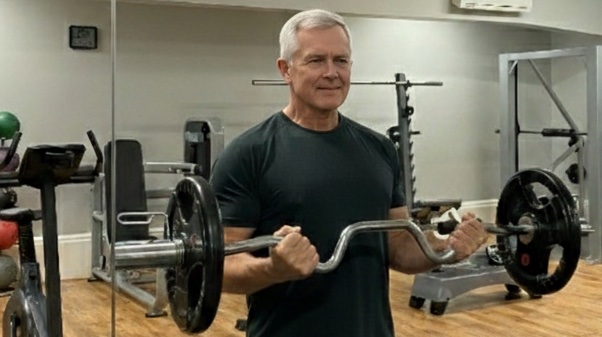
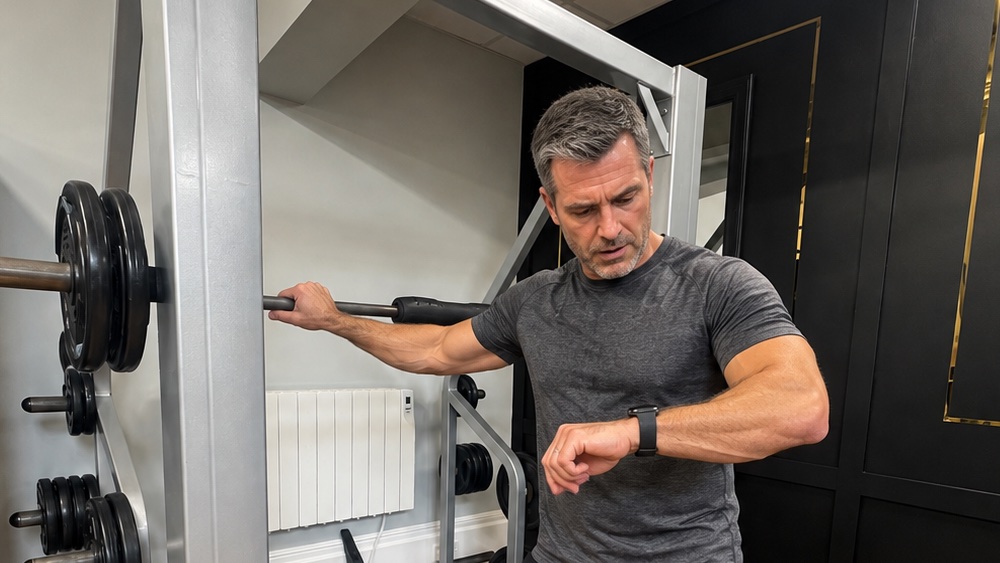
A client was halfway through a heavy set of Smith machine squats when he suddenly stopped and racked the bar.
He looked at his smartwatch.
“My heart rate is 178. It’s gone into the red zone. Is that too high?”
He was breathing hard and his heart was pounding, which wasn’t surprising. He had just completed four demanding repetitions of a heavy squat. But the number on his watch had worried him enough to stop the set.
So instead of looking at the watch, I looked at him.
“Forget the number for a moment. How do you actually feel?”
He thought about it.
“My heart is pounding and I’m breathing hard, but that’s it.”
No chest pain. No dizziness. No feeling faint. No unusual shortness of breath. No nausea.
That distinction matters.
Your Heart Rate Is Only Part of the Picture
When you exercise hard, your muscles need more oxygen. Your heart responds by beating faster and pumping more blood around the body.
A heavy set of squats can produce a very different cardiovascular response from walking on a treadmill or cycling at a steady pace. Heart rate can rise quickly during demanding resistance exercise and then begin to fall during recovery.
Your age, fitness level, medication, hydration, temperature, caffeine intake and the type of exercise you’re doing can all affect the number you see.
This is also why I don’t want clients becoming obsessed with the “zones” displayed on a smartwatch.
Wearable technology can be useful. I use technology myself, and there is value in tracking trends over time. But a watch is a tool, not a medical examination.
Most wrist-based watches estimate heart rate using an optical sensor. Movement, sweat, the position of the watch and gripping equipment can affect the reading, particularly during resistance training.
So when a watch suddenly shows 178 bpm, I don’t automatically assume there is a problem.
I also don’t automatically assume everything is fine.
I look at the person.
Know the Warning Signs
There is a big difference between feeling the normal effects of hard exercise and experiencing symptoms that shouldn’t be ignored.
Stop exercising if you develop symptoms such as:
– Chest pain, pressure or tightness
– Dizziness, lightheadedness or feeling faint
– Unusual or severe shortness of breath
– A new or concerning irregular or racing heartbeat
– Nausea, weakness or feeling suddenly unwell
If symptoms are severe, persistent, or include chest pain or fainting, seek urgent medical attention.
This is something I take seriously at WayFiit. Training hard does not mean ignoring what your body is telling you.
What About Maximum Heart Rate?
You’ve probably heard the old formula:
220 minus your age = maximum heart rate.
For a 42-year-old, that calculation gives 178 beats per minute.
But that does not mean that 178 is a precise biological limit and that 179 suddenly becomes dangerous.
It is an estimate.
Two healthy 42-year-olds can have different heart-rate responses to exactly the same exercise. Fitness history, genetics, medication and the type of activity all make a difference.
That’s one reason I don’t coach somebody from a formula alone.
Hydration and Temperature Matter Too
Heart rate doesn’t respond only to exercise intensity.
If you’re dehydrated, training in a hot environment, poorly recovered or under unusual physical stress, your heart rate may be higher than you normally expect for the same workload.
That’s useful information.
If a client’s heart rate is unusually high compared with what I normally see from them, I want to know why. Maybe we reduce the load. Maybe we extend the recovery period. Maybe the session needs to change completely.
The programme should adapt to the person standing in front of me that day.
Back to the Squats
After a few minutes of easy movement and some water, my client’s breathing settled and his heart rate came down.
More importantly, he felt normal.
We didn’t immediately jump back under the bar. I checked how he was feeling, gave him enough recovery time and adjusted the rest of the session accordingly.
That’s coaching.
At WayFiit, personal training is built around the individual. We assess the person, choose the appropriate training, watch how they respond and make adjustments when necessary.
A smartwatch can give you useful information.
But it doesn’t know how you slept last night. It doesn’t know whether you’re dehydrated. It doesn’t know your medical history. It doesn’t see your technique deteriorating halfway through a set, and it can’t ask you whether you’re feeling dizzy or experiencing chest discomfort.
That’s why technology works best alongside good coaching, not in place of it.
If you’re regularly seeing unusually high heart-rate readings during exercise, particularly if they’re accompanied by chest pain, dizziness, fainting, unusual breathlessness or palpitations, don’t try to train through it. Stop and speak to an appropriate medical professional before pushing harder.
Training should challenge you.
It should also be appropriate for you.